WHEAT MARKETING CENTER
Our Mission
WMC is dedicated to improving the well-being of U.S. wheat farmers and worldwide customers by conducting objective wheat utilization research and delivering transformational educational programs for farmers, customers and industry stakeholders.
What We Do
At Wheat Marketing Center (WMC), we connect growers, millers, and food manufacturers, transforming wheat science into market-ready solutions. Located in Portland’s historic Albers Mill Building, we use cutting-edge research and analytics to help create products that meet evolving consumer needs worldwide.
Wheat Marketing Center provides:
Technical Training
We welcome students and industry professionals with comprehensive education about wheat quality and opportunities to test wheat in specific end products.
Innovative Research
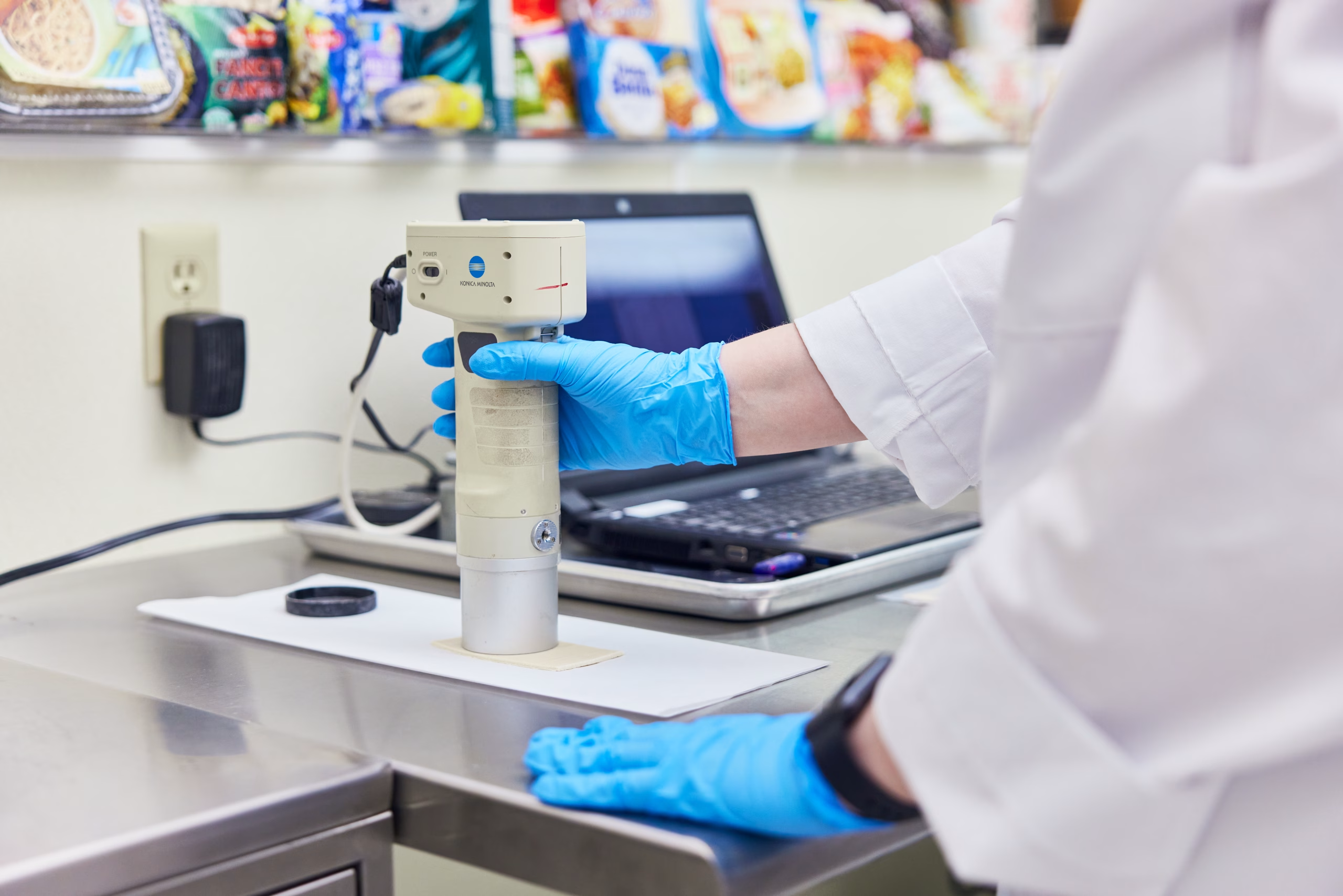
We use state-of-the-art analytical equipment for data analysis and breakthrough product development.
Crop Quality Testing
We analyze the current harvest in real-time to provide buyers the data necessary to make informed purchasing decisions.
Serving as a vital communications connection between those who grow wheat and those who buy it, we understand that consumer tastes are evolving rapidly in domestic and international markets. That’s why WMC aims to offer programs and services that demonstrate how U.S. wheat can be used to meet the ever-changing consumer demands with products that are nutritious, delicious and cost competitive. By demonstrating wheat’s quality and functionality in food products like Asian noodles, crackers and biscuits, tortillas and flatbread, and many other baked goods, WMC promotes U.S. wheat as a premium option that meets global market demands. When visiting Wheat Marketing Center, you will find exceptional technical expertise within our lab team, where they work
- Innovation Lab – featuring pilot-scale production lines where ideas become reality
- Analytical Lab – equipped with state-of-the-art testing equipment for precise quality analysis
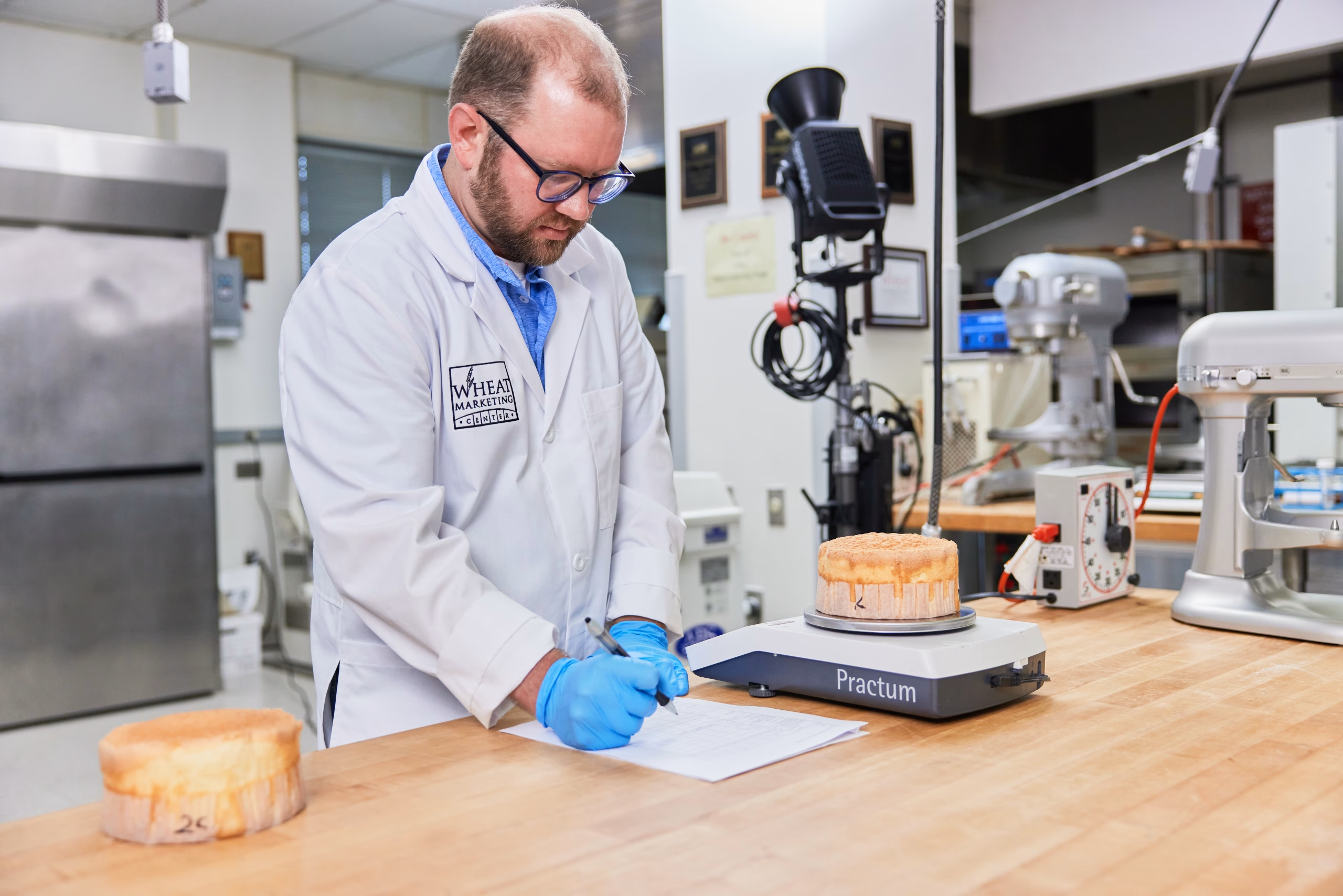
- Bake Lab – where end products are created and perfected to understand how wheat quality impacts the foods we eat
Through research and innovation, WMC provides great exceptional value to our state wheat commission partners, wheat industry stakeholders, and milling and food manufacturers around the world.
Our Impact
In a typical year, WMC receives over 500 visitors from 20 countries, hosting hundreds of courses and workshops for wheat producers and stakeholders worldwide. The flags on the walls of our Innovation Lab underscore the global breadth and reach of WMC services, representing decades of international collaboration and knowledge exchange.
Our Funding
The Wheat Marketing Center receives the majority of its funding from state wheat commissions from Idaho, Oregon, Washington, Colorado, Montana, Nebraska, North Dakota, and Oklahoma. These commissions understand the value in investing in WMC’s data-driven approach to helping their growers maintain and improve the quality of their wheat. Each year, these states allocate funding for general operations, grower workshops, special projects, and new equipment. Other operating income is generated by technical course fees, research projects, and lab testing services.
Our History
Prior to the 1950’s, the Willamette River in Portland was lined with milling facilities where wheats and other agricultural products were milled into flour and feed before being shipped directly from the Port of Portland to global markets. With advancement in ship construction and technology in the 1950’s, exporting wheat as a raw product became more common, leading many riverside mills to close their doors.
Today the original Albers Mill Building stands as a testament to Portland’s rich agricultural heritage. Preserving many original architectural elements from its milling days, this historic building has been thoughtfully re-constructed into modern office space that has housed and continues to house wheat industry professionals, including the Wheat Marketing Center.
During the 1980’s, wheat producers who were sending their wheat to export globally through PNW ports, dreamed of creating a research and technical center to improve their understanding and knowledge about the quality and value of U.S. wheat. Thanks to the leadership of U.S. Senator Mark Hatfield of Oregon, Congress allocated $6 million to transform this vision into reality.
The Port of Portland and seven state wheat commissions from Idaho, Oregon, Washington, Colorado, Montana, Nebraska, and North Dakota were WMC’s charter entities. Oregon State University administered the federal grant that helped fund the project. In the summer of 1988, the newly-formed Wheat Marketing Center hosted a workshop attended by 50 participants, including wheat commission members and staff, customers from Japan, Korea, and Taiwan, government officials, and other representatives from the wheat industry. This foundational workshop helped shape WMC’s programs and establish its priorities. Wheat Marketing Center officially opened in October 1989.
The Alberts Mill Building, listed on the National Register of Historic Places and designated as a Portland Landmark, went through extensive renovations to house the Wheat Marketing Center. Over the years it has also housed wheat-related entities including U.S. Wheat Associates, the Oregon Wheat Commission, and the U.S. Federal Grain Inspection Service (FGIS). The building is jointly owned by the Wheat Marketing Center and the Bill Naito Company.
WMC remains steadfast in its core mission of improving the understanding of how U.S. wheat can meet the changing demands of global consumers. The original seven charter states and the Port of Portland remain engaged and are joined on the board by five other industry representatives. The Oklahoma Wheat Commission joined the WMC Board in 2018. Through new training programs, cutting-edge equipment, and innovative research initiatives, we continue to meet the ever-evolving challenges facing the wheat industry.