UNIVERSITY OF IDAHO AGRICULTURAL ECONOMICS PROGRAM STUDENTS VISITED PORTLAND FOR IMMERSIVE WHEAT EXPORT TOUR IN PARTNERSHIP WITH WHEAT MARKETING CENTER
Second year of a five-year USDA-funded collaboration brings students from universities nationwide to experience the wheat supply chain firsthand — from farm gate to overseas markets
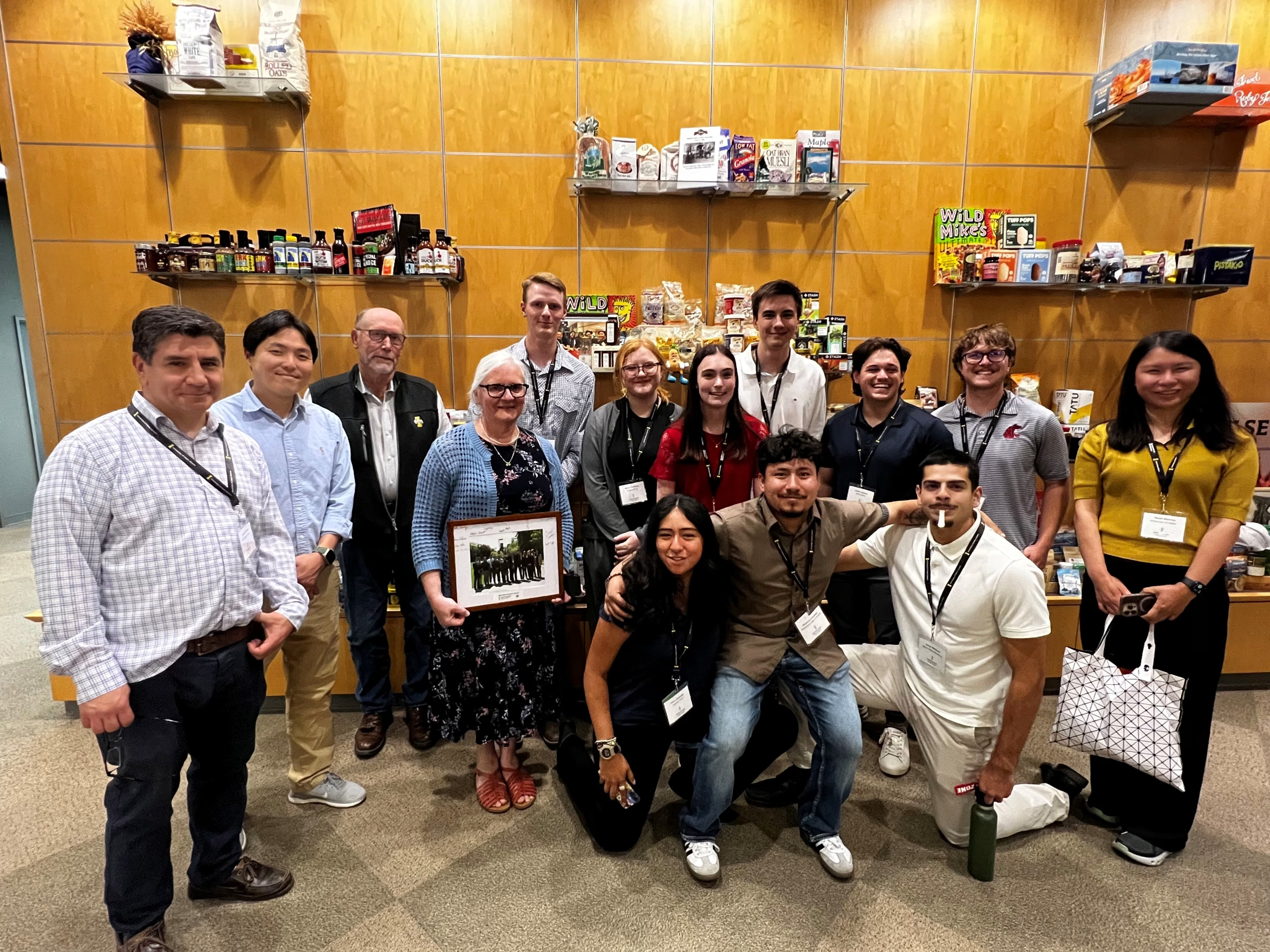
PORTLAND, OR — The Wheat Marketing Center (WMC), a 501(c)(3) nonprofit organization based in Portland, Oregon, hosted students from the University of Idaho’s AgBiz Summer Fellow Program for a weeklong wheat export and industry tour from June 1–5, 2026. The visit marked the second year of a five-year collaboration between WMC and the University of Idaho, supported by a grant from the U.S. Department of Agriculture’s National Institute of Food and Agriculture (USDA-NIFA).
“I have had a great time touring various agriculture facilities in the PNW this past week,” said Matthew Wirtz, a student from Idaho State University. “I don’t have a traditional agriculture background; so this trip helped me understand the entire supply chain from plant to the end product. This was a wonderful opportunity!”
The program, part of the University of Idaho’s Barker Agricultural Commodity Risk Management curriculum offered jointly by the College of Agricultural and Life Sciences and the College of Business and Economics, is dedicated to training the next generation of agricultural marketing professionals and leaders. Through a combination of hands-on research, real-world exposure to risk management practices, mentorship from faculty and industry leaders, and direct engagement with the wheat supply chain, students develop the analytical and professional skills needed for careers in agricultural economics, agribusiness, and policy.


A Week Inside the Wheat Supply Chain
During their five-day visit to the Portland area, students experienced every link in the wheat supply chain, from oilseed processing and flour milling to grain export terminals, river transportation, and commercial baking.
“This week in Portland has given me a clear picture of the wheat industry,” said University of Idaho student Marin Tortarella. “Each part from the grain terminals in Lewiston all the way to ocean vessels has much more to it than meets the eye. The Wheat Marketing Center helped me understand consumer tastes and how we adjust formulas to meet high quality standards. U.S. Wheat Associates also showed me the importance of how strong communication and professionalism can change trade flows that our farmers depend upon. Overall, I feel much closer to being ready to join the wheat industry when I graduate.”
The Portland-region tour itinerary included stops at:
- Viterra Oilseed Processing — exploring grain merchandising and oilseed operations in the Pacific Northwest
- Marsee Bakery and Dave’s Killer Bread — seeing wheat transformed into consumer products at local and commercial bakery scales
- Columbia Export Terminal — touring one of the Columbia River’s major grain elevators and export facilities
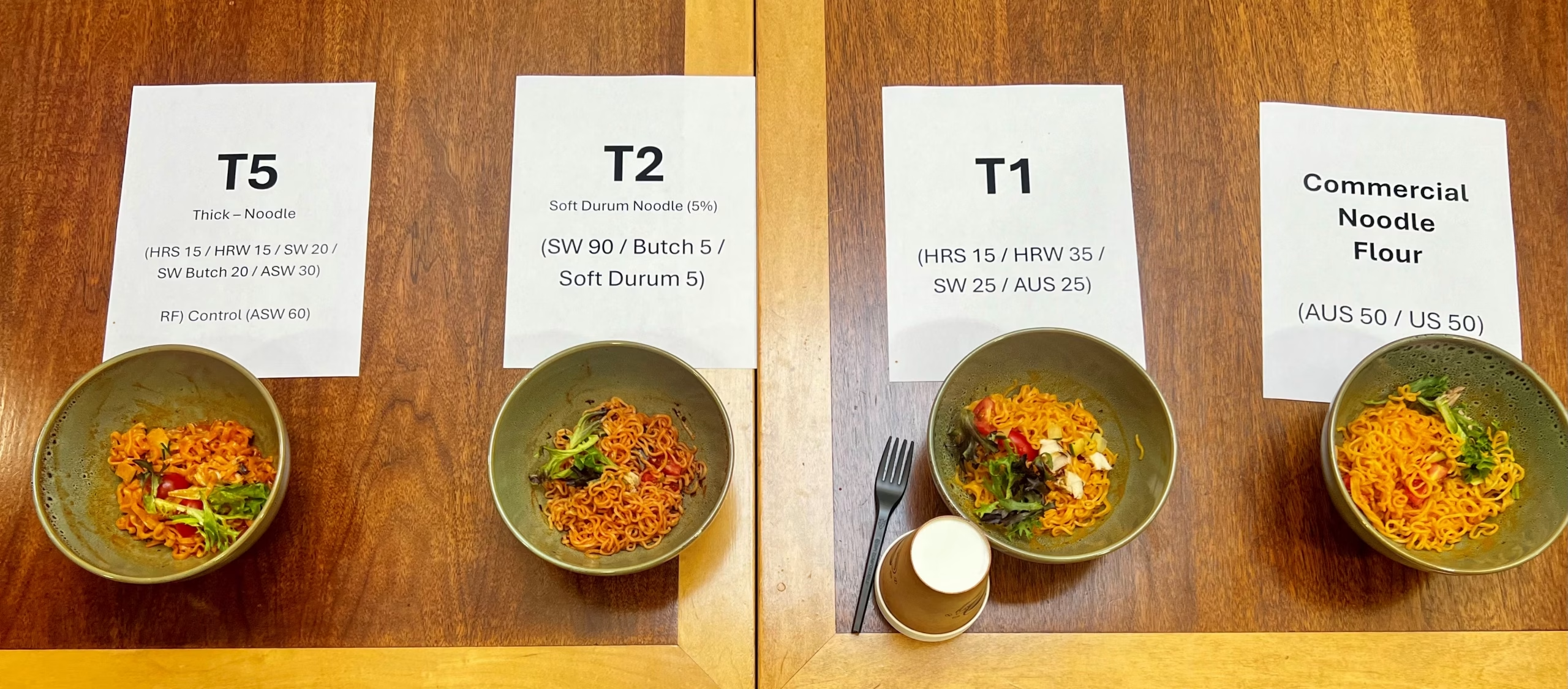
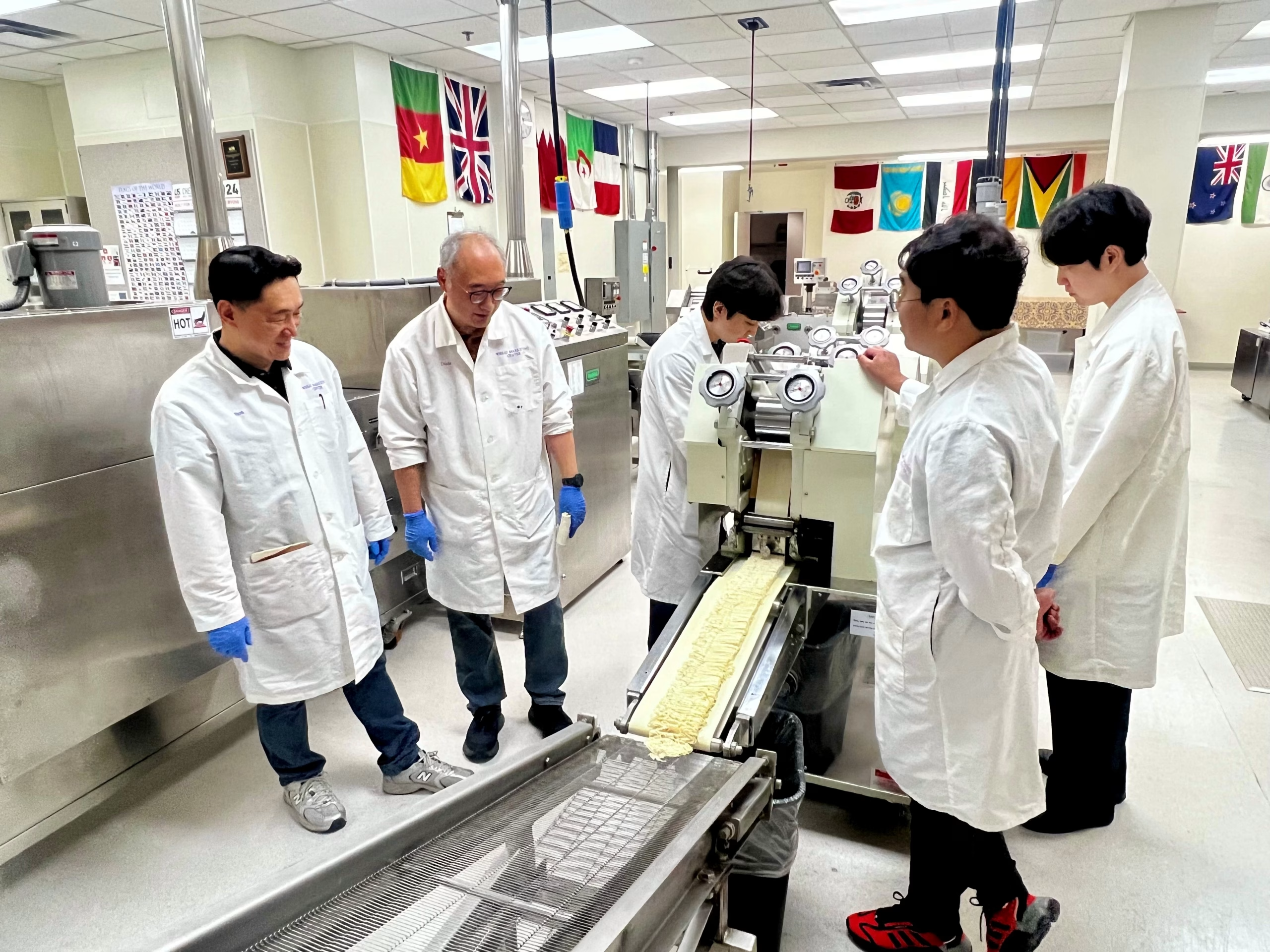
- Wheat Marketing Center — a full day of hands-on demonstrations in WMC’s Innovation Lab (cracker, noodle, and tortilla pilot lines), Analytical Lab (Alveograph and Falling Number testing), and Bake Lab, plus a USDA Federal Grain Inspection Service (FGIS) grading demonstration and a Crop Quality report review
- U.S. Wheat Associates — learning about wheat export markets and the role of U.S. wheat in global trade
- Columbia Grain International — gaining insight into grain merchandising, commodity marketing, and logistical risk management
- Shaver Transportation — touring tug operations and river navigation, with a presentation from the Pacific Northwest Waterways Association
- OSU Food Innovation Center — exploring food science research and commercialization
- Columbia River Bar Pilots — learning about how ships are guided safely across the hazardous Columbia River Bar, one of the most dangerous maritime crossings in the world
- Grain Craft Flour Mill — experiencing the commercial milling process
- Port of Portland, Terminal 6 — highlighting the container program and the role the Port plays in international import-export relationships
- Bonneville Dam — connecting the Pacific Northwest’s hydropower and transportation infrastructure to the agricultural economy


A Model for University-Industry Collaboration
The program is led by Dr. Xiaoli Etienne, Professor in the Department of Agricultural Economics and Rural Sociology, and Bill Flory former Idaho Wheat Commissioner and Endowed Chair in Commodity Risk Management at the University of Idaho. Program faculty leaders also include Dr. Andres Trujillo-Barrera, Dr. Hernan Tejeda, Mr. Norm Ruhoff, and Mr. Brett Wilder, also of the University of Idaho.
In addition to students in attendance from the University of Idaho, the collaboration draws students from universities across the country, including institutions such as Washington State University, Brigham Young University-Idaho, Idaho State University, Boise State University and Virginia Tech — reflecting the program’s national scope and reach.
Bill Flory, an Idaho wheat farmer and former WMC Board Chair, has been instrumental in the development and planning of the program, serving as a bridge between the academic and industry worlds.
“This is the second year in a five-year program we are partnering on with the University of Idaho,” said Mike Moran, Executive Director of Wheat Marketing Center. “WMC is a major component of the tour, and it is our goal to give students a deep understanding of all the variables and people that support the quality and value of U.S. grown wheat in global markets.”
Building on a Successful Inaugural Year
The program’s inaugural year in 2025 was met with enthusiastic praise from students and faculty. Dr. Etienne wrote to WMC following last year’s visit: “Our time at the Wheat Marketing Center was incredibly informative, and also one of the most memorable parts of the entire tour. From the hands-on demos to the thoughtful conversations about wheat quality, product development, and market expectations, every session was engaging and impactful.”
The five-year USDA-NIFA grant ensures continuity and allows WMC and the University of Idaho to build a replicable educational model that strengthens each year. As Moran noted during the program’s pilot phase: “In this first pilot year, we aim to establish a program that can be replicated and improved for all five years of the grant.”
The second year of the PNW tour was an even greater success as the students got to experience additional tour stops and get an even broader understanding of the wheat value chain. Washington State University student Caelyn Pullen commented on her experience of this year’s tour in saying:

“Throughout this trip I have had the opportunity to learn a ton about the process of marketing wheat from its transportation and everything that goes into that to learning about the innovation and process that goes into creating and adapting new products. At the Wheat Marketing Center I really enjoyed learning about how they connect with producers, consumers, and end product manufacturers. It was also an eye opening experience to be able to tour the different labs and learn about the services the WMC offers.”
About the Wheat Marketing Center
The Wheat Marketing Center is a private, nonprofit organization founded by U.S. state wheat commissions to advance education and research on the end uses, quality, and value of U.S.-grown wheat. Known as the education and research bridge connecting growers and customers of U.S. wheat, WMC is located in the historic Albers Mill Building on Portland’s working waterfront. WMC conducts technical training, hosts international trade delegations, conducts food science research, and produces educational resources for industry partners and students worldwide.
About the University of Idaho AgBiz Summer Fellow Program
The AgBiz Summer Fellow Program is an eight-week paid summer fellowship at the University of Idaho, supported by a USDA-NIFA grant as part of the Barker Agricultural Commodity Risk Management program. Students gain hands-on research experience under individual faculty mentors, explore the agricultural supply chain, participate in simulated commodity futures and options trading, and build professional connections through networking with industry leaders. The Portland Grain Trade Tour is a signature component of the program, exploring the logistics of the wheat supply chain from Idaho’s Snake River corridor to the export terminals in Portland.